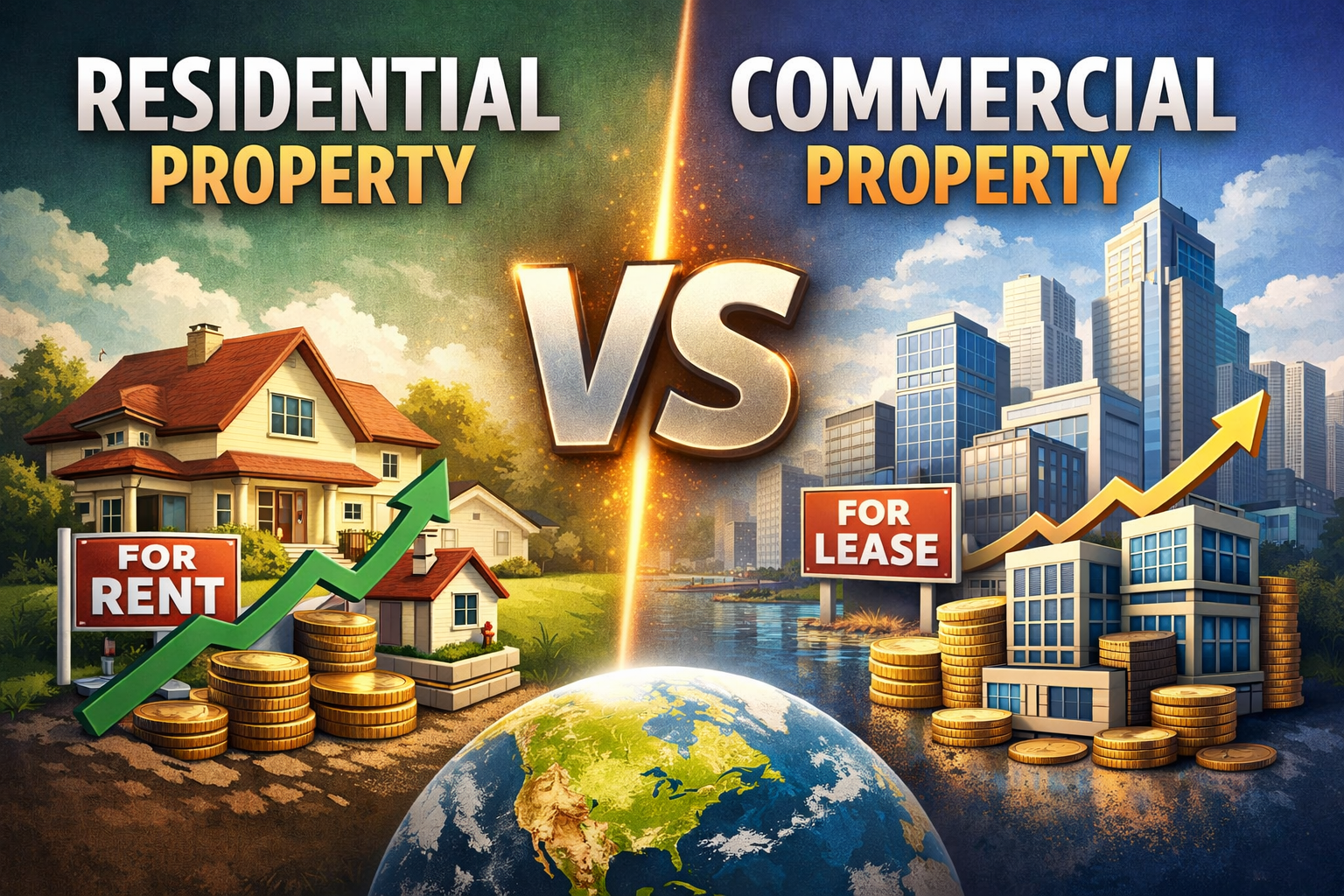
Residential vs Commercial Property Investment Globally—which investment is better globally? Compare returns, risks, costs, and suitability to choose the right real estate investment worldwide.
Table of Contents
When investing in real estate, one of the most important decisions investors face worldwide is choosing between residential property and commercial property. Both asset classes offer unique advantages, risks, and return profiles, and the right choice depends on your capital, risk tolerance, and investment goals.
This guide compares residential vs commercial property investment globally, helping you decide which option aligns best with your long-term strategy.
Understanding Residential and Commercial Property : Residential vs Commercial Property Investment Globally
What Is Residential Property?
Residential property includes homes designed for living purposes, such as:
- Apartments and flats
- Houses and villas
- Condominiums
- Townhouses
Residential investments typically generate income through monthly rent.
What Is Commercial Property?
Commercial property is used for business activities, including:
- Office spaces
- Retail shops
- Warehouses
- Industrial units
- Co-working spaces
Commercial properties usually involve long-term leases with business tenants.
Entry Cost and Affordability
Residential Property
- Lower entry cost
- Easier for first-time investors
- More financing options available
Commercial Property
- Higher purchase price
- Larger capital requirement
- Financing can be more restrictive
Residential vs Commercial Property Investment Globally.
Rental Income and Cash Flow
Residential Property Income
- Monthly rental payments
- High tenant turnover
- Rent depends on local housing demand
Commercial Property Income
- Higher rental yields
- Long-term lease agreements
- Stable income if occupied
Commercial property often offers higher income, but vacancy can be more costly.
Vacancy Risk and Tenant Stability
Residential Property
- Easier to find tenants
- Shorter vacancy periods
- Frequent tenant changes
Commercial Property
- Longer vacancy periods if tenant leaves
- Fewer tenants in the market
- Higher impact of vacancy on income
Globally, residential property offers lower vacancy risk.
Lease Structure and Flexibility
Residential Leases
- Short-term (6–12 months)
- More flexibility for owners
- Rent adjustments possible
Commercial Leases
- Long-term (5–10 years)
- Fixed rental escalations
- Limited flexibility
Commercial leases provide stability but less flexibility.
Maintenance and Operating Costs
Residential Property
- Lower maintenance costs
- Repairs are manageable
- Costs borne mostly by owner
Commercial Property
- Higher maintenance and operating costs
- Tenants may bear some expenses
- Requires professional management
Commercial properties often require more active management.
Capital Appreciation Potential
Residential Property
- Strong appreciation in growing cities
- Driven by population growth and housing demand
Commercial Property
- Appreciation linked to business activity
- Location and economic cycles play a major role
Residential property often shows more consistent appreciation globally.
Taxation and Regulations
Residential Property
- Simpler tax structure
- Easier compliance
Commercial Property
- Complex tax and legal requirements
- Higher transaction costs
Understanding local laws is essential for both, especially abroad.
Global Comparison Table
| Factor | Residential Property | Commercial Property |
|---|---|---|
| Entry cost | Low to medium | High |
| Rental yield | Medium | High |
| Vacancy risk | Low | High |
| Lease duration | Short-term | Long-term |
| Management complexity | Low | High |
| Appreciation | Stable | Market-dependent |
Which Investment Is Better for You?
Choose Residential Property If:
- You are a first-time investor
- You want stable demand
- You prefer easier management
- You have limited capital
Choose Commercial Property If:
- You seek higher rental income
- You can manage higher risk
- You have sufficient capital
- You prefer long-term leases
Globally, many investors start with residential and diversify into commercial later.
Can You Combine Residential and Commercial Investments?
Yes. Diversification reduces risk.
Many global investors:
- Hold residential property for stability
- Add commercial property for higher income
- Balance risk and returns across assets
A mixed portfolio often performs better over time.
Common Mistakes to Avoid
- Ignoring vacancy risk in commercial property
- Overestimating rental income
- Not understanding lease terms
- Underestimating management complexity
- Ignoring local laws and taxes
Avoiding these mistakes improves long-term results.
Final Thoughts
There is no universal winner between residential and commercial property investment globally. Residential property offers stability and accessibility, while commercial property provides higher income potential with higher risk.
The right choice depends on your financial capacity, risk appetite, and long-term objectives. With proper research and planning, both can be valuable components of a global real estate portfolio.