Discover how real estate tokenization is breaking down barriers to property investment. Learn about liquidity, blockchain, and fractional ownership today.
Table of Contents
I was grabbing a burger with a buddy of mine, Leo, a few weeks ago. Leo is a hardworking guy, saves a decent chunk of his paycheck, and has been itching to get into property. But every time he looks at the market, he gets discouraged. “I’ve got $10,000,” he told me, “but in this city, that won’t even cover the closing costs on a studio apartment, let alone a down payment.”
Leo’s story isn’t unique. For decades, the real estate market has been a bit of a “private club” with a massive velvet rope at the entrance. If you didn’t have six figures in cash or a pristine credit score to bag a massive mortgage, you were stuck on the sidelines watching everyone else build equity.
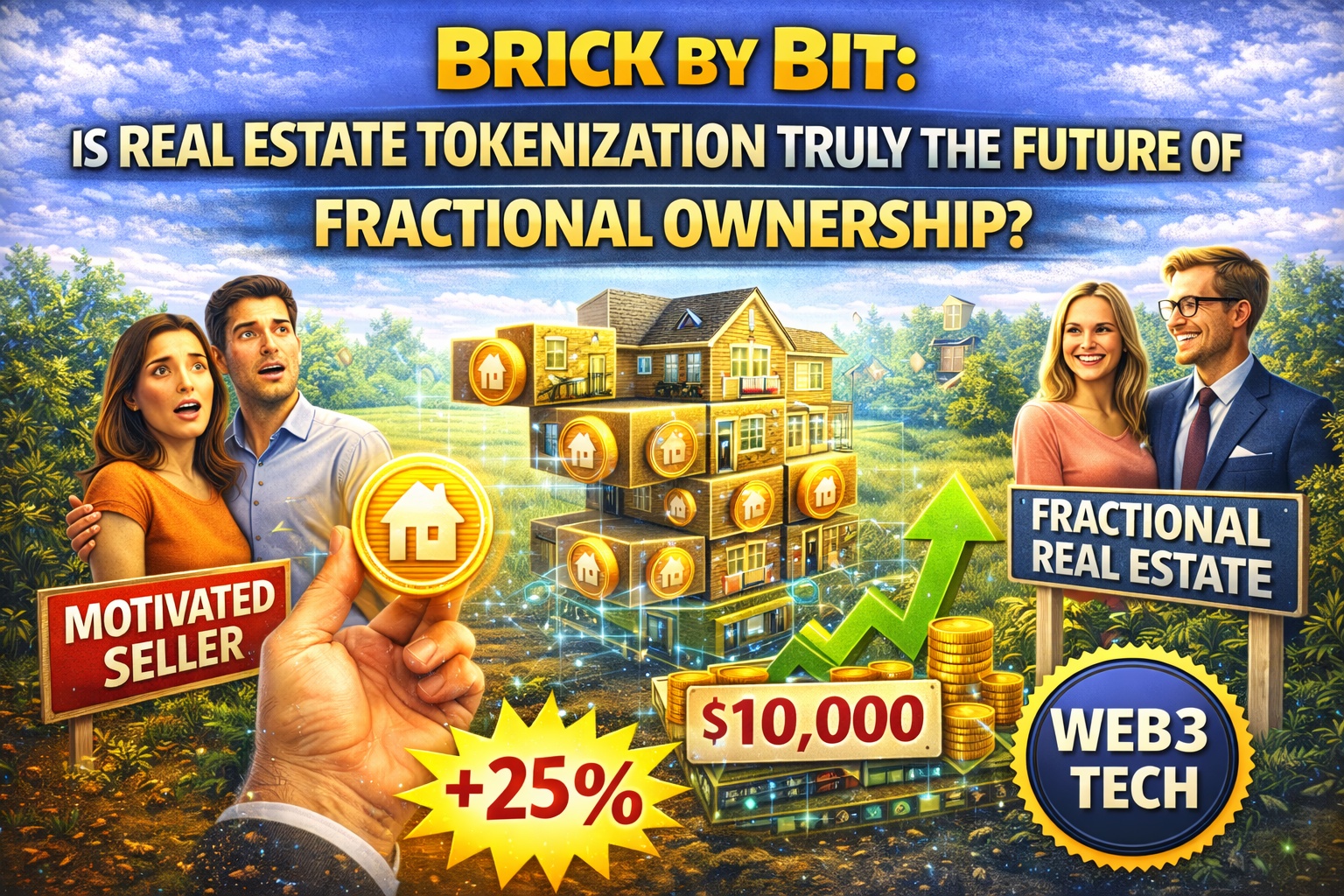
But things are shifting. We’re entering an era where you don’t necessarily have to buy the whole building to own a piece of it. This is where the concept of real estate tokenization comes into play. It’s a bit of a techy term, I know, but at its heart, it’s about democratizing the dirt. It’s about taking a $10 million apartment complex and chopping it up into tiny, digital “shares” that people like Leo can actually afford.
As we move through 2026, the buzz around real estate tokenization is moving from fringe tech circles into the mainstream investment world. But is it just a passing fad, or are we actually witnessing the most significant change to property ownership in a century? Let’s peel back the curtain and look at how this actually works for real people.
What Exactly Is Real Estate Tokenization?
At its simplest, real estate tokenization is the process of creating digital tokens on a blockchain that represent ownership in a physical property. Think of it like a digital stock. Instead of owning a paper deed that sits in a dusty county office, your ownership is recorded on a blockchain, making it secure, transparent, and—most importantly—divisible.
When we talk about real estate tokenization, we are talking about extreme fractional ownership. A single property can be split into thousands of tokens. This means you could literally own $500 worth of a high-rise in Miami or a warehouse in London. You get your share of the rental income, and if the property value goes up, your token value goes up. It’s property investment without the “all-or-nothing” barrier to entry.
The Liquidity Revolution
The biggest headache with traditional real estate has always been liquidity. If you own a house and you need $20,000 for an emergency, you can’t just sell the kitchen. You have to list the whole house, wait for a buyer, deal with inspections, and wait 45 days to close. It’s a slow, clunky process.
Real estate tokenization changes that math. Because the ownership is digital and standardized, you can potentially sell your tokens on a secondary market much faster than you could sell a physical building. This “liquidity” is a game-changer for the average investor. It allows you to move in and out of positions without being “house poor” or trapped in a single asset for a decade.
Breaking Down the “Rich Person” Barrier
For a long time, the best deals—think commercial office parks or luxury hotels—were reserved for institutional investors or “accredited” individuals with massive net worths. Real estate tokenization acts as a giant equalizer.
By lowering the minimum investment, real estate tokenization allows a retail investor to build a diversified portfolio. Instead of putting all your eggs in one single-family rental in your backyard, you could spread that same amount of money across ten different tokenized properties in ten different states. This kind of diversification used to be impossible for anyone without a private jet.
Transparency and “Smart Contracts”
One of the coolest (and most practical) parts of real estate tokenization is the use of smart contracts. These are essentially self-executing bits of code that handle the “boring stuff.”
When the rent comes in from a tenant, the smart contract can automatically distribute the profits to every token holder based on their percentage of ownership. No more waiting for a property manager to cut you a check or wondering if the accounting is correct. In the world of real estate tokenization, the ledger is public and immutable. It builds a level of trust that the traditional industry sometimes struggles to maintain.
Real-Life Example: The Tokenized Office Space
Let’s look at a hypothetical. A developer in Surat wants to build a new co-working space but doesn’t want to take on a massive bank loan with 2026 interest rates. Instead, they opt for real estate tokenization.
They split the $5 million project into 50,000 tokens priced at $100 each. Local entrepreneurs, residents, and even international investors buy in. The developer gets their funding without a restrictive bank, and the token holders now own a piece of a prime commercial asset. As the co-working space fills up with tenants, the token holders see monthly distributions hit their digital wallets. This is real estate tokenization in action—turning a massive capital hurdle into a community-funded asset.
Navigating the Regulatory Landscape
I’d be lying if I said it was all smooth sailing. The biggest hurdle for real estate tokenization right now isn’t the technology; it’s the law. Property law is old—like, “written on parchment” old in some places. Merging that with 21st-century blockchain tech is a headache for regulators.
Different countries have different rules about what constitutes a “security.” If you’re looking into real estate tokenization, you have to make sure the platform you’re using is compliant with the SEC or your local equivalent. We’re in a bit of a “Wild West” phase, but as the legal frameworks catch up, we’re going to see a flood of institutional money enter the space.
The Downside: What Could Go Wrong?
No investment is risk-free, and real estate tokenization is no exception. While the token is digital, the asset is very much physical.
- Physical Risks: If the building burns down or the neighborhood goes downhill, your token is going to lose value.
- Platform Risk: You are relying on the platform that issued the tokens to stay in business and manage the property correctly.
- Market Adoption: If nobody else wants to buy your tokens, that “liquidity” we talked about disappears.
Even with real estate tokenization, the fundamental rules of property investment still apply. You still need to look at the location, the tenant quality, and the local market trends.
FAQ Section
1. Is real estate tokenization the same as a REIT? Not quite. A REIT (Real Estate Investment Trust) is a company that owns a portfolio of properties, and you buy shares in that company. With real estate tokenization, you are usually buying a direct ownership interest in a specific property. It gives you more control over exactly what you own.
2. Can I live in a house that I’ve tokenized? Usually, no. Most real estate tokenization projects are designed for investment properties like rentals or commercial spaces. If you own 1% of a house, you can’t really “live” in 1% of the living room. It’s a financial play, not a housing solution.
3. Do I need to understand crypto to invest in real estate tokenization? A basic understanding of digital wallets is helpful, but many modern platforms are making it as easy as using a standard banking app. You often don’t even see the “blockchain” part; you just see your investment and your returns.
4. How does real estate tokenization handle property taxes? The property taxes are typically handled at the property management level before the profits are distributed to token holders. When you participate in real estate tokenization, your distributions are generally “net” of these operating expenses.
5. What happens if I lose my digital key? This is a big one. Because real estate tokenization is built on blockchain, security is paramount. However, most regulated platforms have recovery systems in place to verify your identity and restore access to your assets, unlike the early days of Bitcoin.
6. Is there a minimum investment for real estate tokenization? It depends on the platform, but many allow you to start with as little as $50 or $100. This low barrier is exactly why real estate tokenization is gaining so much traction with younger investors.
Conclusion
Is real estate tokenization the future? I think it’s a massive part of it. We are moving away from a world of “gatekeepers” and toward a world of “gateways.”
The ability to own a slice of the world’s most stable asset class without needing a million dollars is a win for everyone. It helps developers raise capital, and it helps people like Leo finally get their foot in the door. It’s not a magic wand—you still have to do your homework—but it’s a tool that makes the mountain of homeownership a lot easier to climb.
As the tech matures and the lawyers stop arguing, real estate tokenization will likely become as common as buying a fractional share of a tech stock. The dirt isn’t changing, but the way we own it certainly is.