
Learn ‘How much home loan can you get to buy house in US?’ Factors, income rules, credit score, EMI limits, and smart tips explained simply.
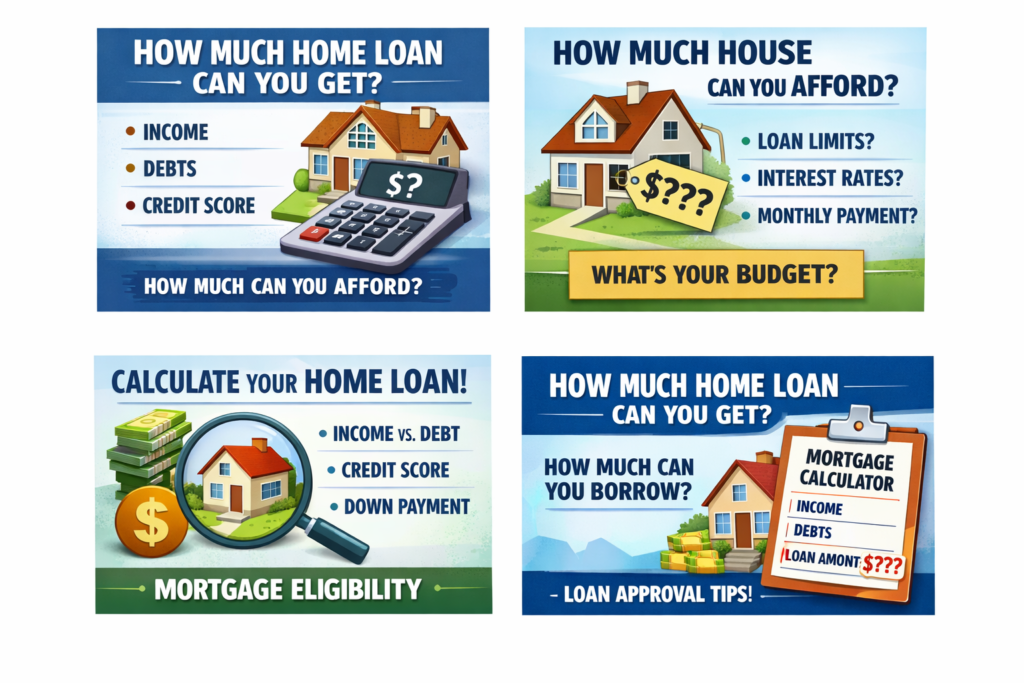
Buying a home in the United States is a dream for many people. But before you start browsing listings or imagining your future living room, there’s one big question you probably have in mind: how much home loan can you get to buy a house in the US?
Think of a home loan like a backpack you carry on a long journey. If it’s too heavy, you’ll struggle every step of the way. If it’s just right, the journey feels comfortable. Lenders in the US think the same way — they want to make sure your loan is something you can comfortably carry for years.
In this detailed guide, we’ll break everything down in simple, conversational language. No complicated terms, no confusion. By the end, you’ll clearly understand how much home loan you can get in the US, what affects it, and how you can increase your eligibility.
1. Understanding Home Loans in the US
A home loan, also called a mortgage, is money borrowed from a bank or lender to buy a house. You repay this amount in monthly installments over a long period, usually 15 to 30 years.
The key thing to remember is this:
👉 The lender doesn’t just look at the house price. They look at you.
Your income, debts, credit score, and financial habits all play a role in deciding how much home loan you can get to buy a house in the US.
2. What Do Lenders Mean by “How Much Loan You Can Get”?
When lenders say “how much loan you qualify for,” they are asking:
- Can you afford the monthly payments?
- Are you financially responsible?
- Will you likely repay the loan on time?
They calculate the maximum loan amount, not necessarily the amount you should borrow. Smart buyers often borrow less than the maximum to live stress-free.
3. Your Income: The Foundation of Your Home Loan
Your gross monthly income (income before taxes) is the starting point.
This can include:
- Salary or wages
- Business income
- Rental income
- Bonuses or commissions (if consistent)
💡 Higher income = higher loan eligibility, but only if your expenses are under control.
For example:
- Monthly income: $6,000
- Lenders may allow housing costs up to 28–31% of this income.
4. Debt-to-Income Ratio (DTI) Explained Simply
The Debt-to-Income Ratio (DTI) compares your monthly debts to your monthly income.
DTI = Total Monthly Debts ÷ Gross Monthly Income
Most US lenders prefer:
- 36% DTI for conventional loans
- Up to 43–50% for FHA loans in some cases
Monthly debts include:
- Car loans
- Credit card payments
- Student loans
- Existing EMIs
👉 Lower DTI = higher home loan amount
5. Credit Score: Your Financial Report Card
Your credit score tells lenders how reliable you are with money.
Typical ranges:
- 760+ – Excellent
- 700–759 – Very good
- 660–699 – Good
- 580–659 – Fair
- Below 580 – Poor
A higher credit score means:
- Higher loan eligibility
- Lower interest rates
- Better loan terms
If your score is low, your loan amount may shrink — or cost more.
6. Down Payment and Its Big Impact
A down payment is the money you pay upfront when buying a house.
Common options:
- 20% down – Best terms, no PMI
- 3–5% down – Possible with FHA or conventional loans
- 0% down – VA or USDA loans (eligible buyers only)
💡 Higher down payment = lower loan amount needed, which improves approval chances.
7. Loan-to-Value (LTV) Ratio
The Loan-to-Value (LTV) ratio compares your loan amount to the home’s value.
Example:
- Home price: $400,000
- Down payment: $80,000
- Loan amount: $320,000
- LTV = 80%
Lower LTV makes lenders more comfortable and may increase how much home loan you can get in the US.
8. Employment and Job Stability
Lenders love stability.
They usually want:
- At least 2 years of consistent employment
- Same industry or role
- Reliable income proof
Freelancers and business owners may need extra documents, but approval is still possible.
9. Types of Home Loans in the US
Different loans allow different limits:
- Conventional Loans – Best for strong credit
- FHA Loans – Flexible, low down payment
- VA Loans – For veterans, no down payment
- USDA Loans – Rural areas, low income limits
- Jumbo Loans – For expensive homes
Each type affects how much home loan you can get to buy a house in the US.
10. Interest Rates and Loan Amount
Interest rates change over time and affect affordability.
- Lower rate = higher loan eligibility
- Higher rate = lower loan amount
Even a 1% change can impact your monthly payment significantly.
11. Property Type and Location
Not all properties are treated the same.
Factors include:
- Single-family home vs condo
- Primary residence vs investment property
- City, state, and market demand
Some areas have higher loan limits, especially for conforming loans.
12. Example: How Much Home Loan Can You Get?
Let’s keep it simple.
- Monthly income: $7,000
- Monthly debts: $1,500
- Allowed DTI: 43%
Max monthly housing cost:
- $7,000 × 43% = $3,010
This may translate to a home loan of around $400,000–$500,000, depending on interest rate and taxes.
13. How to Increase Your Home Loan Eligibility
Want a bigger loan? Try this:
- Improve your credit score
- Pay off small debts
- Increase your down payment
- Add a co-borrower
- Choose a longer loan term
Small changes can make a big difference.
14. Common Mistakes to Avoid
Avoid these traps:
- Taking new loans before applying
- Maxing out credit cards
- Ignoring hidden costs
- Borrowing the maximum limit blindly
Remember, comfort matters more than approval.
15. Final Thoughts
So, how much home loan can you get to buy a house in the US? The answer depends on you — your income, debts, credit score, and financial habits.
Think of a home loan like a long-term relationship. Choose wisely, plan carefully, and make sure it fits your life — not the other way around.
FAQs
1. How much home loan can I get in the US based on salary?
Your loan amount usually depends on your income and DTI ratio, typically allowing 28–43% of your income for housing costs.
2. What credit score is needed to get a good home loan in the US?
A score of 700 or above is ideal, but some loans are available with scores as low as 580.
3. Can I get a home loan in the US with low down payment?
Yes, FHA, VA, and USDA loans allow low or even zero down payment, depending on eligibility.
4. Does existing debt reduce my home loan amount?
Yes, higher existing debt increases your DTI, which can reduce how much home loan you can get.
5. Can self-employed people get a home loan in the US?
Absolutely. You may need extra documents, but self-employed borrowers can qualify for competitive home loans.