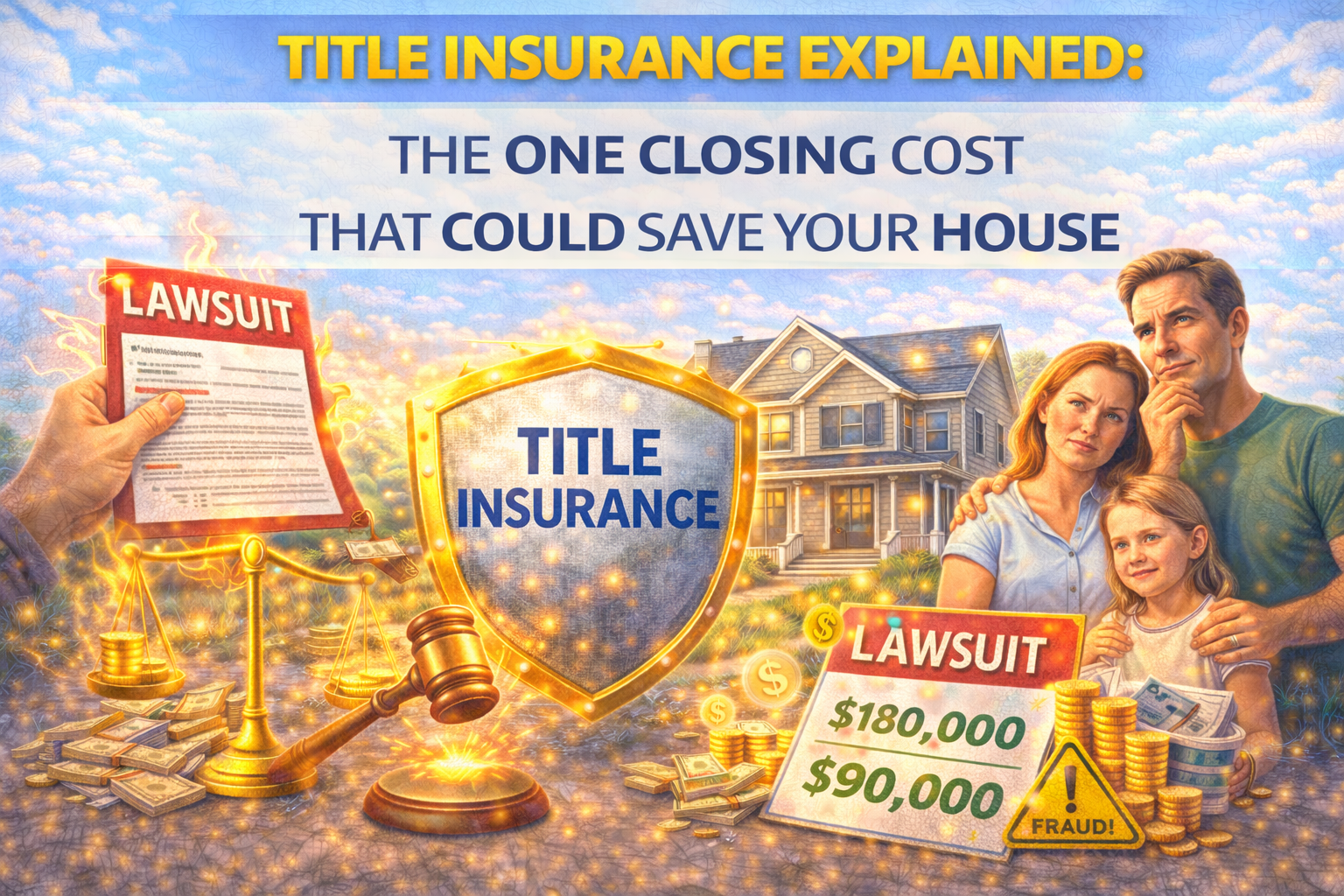
Confused by the stack of closing docs? Get insurance explained in plain English. Learn why this one-time fee protects your home from hidden legal nightmares.
Table of Contents
I still have a vivid memory of my very first closing. I was sitting at a mahogany conference table that was slightly too big for the room, my hand cramping from signing my name for the fiftieth time. The escrow officer slid yet another piece of paper across the table. It had a hefty price tag attached to it.
“And this,” she said cheerfully, “is your owner’s title policy.”
I paused. I had already bought homeowners insurance. I had mortgage insurance. Why on earth did I need another policy? I almost asked if I could skip it to save a few bucks. Thank goodness I didn’t.
If you are currently staring at a Loan Estimate and wondering if you can scratch this line item off, you are not alone. It is the most misunderstood fee in real estate. To help you make sense of it, I want to get title insurance explained in a way that actually makes sense—no legal jargon, just the truth about what you are buying and why it matters.
What Is Title Insurance, Really?
Most insurance looks forward. You pay car insurance in case you might get into a crash next week. You pay health insurance in case you might get sick next year.
When having title insurance explained by a pro, the first thing they should tell you is that it looks backward. It protects you from things that have already happened in the past but haven’t been discovered yet. It is a shield against the “skeletons in the closet” of your property’s history.
When you buy a house, you aren’t just buying wood and bricks; you are buying the “title”—the legal right to own and use that land. But that land has a history. Maybe it was owned by a farmer in 1950, a developer in 1980, and a family in 2005. If any one of those transfers was done incorrectly, or if someone forgot to pay a bill along the way, your ownership could be at risk today.
The Two Types of Policies: Lender vs. Owner
One of the most confusing parts of getting title insurance explained is realizing there are actually two different policies, and they protect two different people.
1. The Lender’s Policy
If you are getting a mortgage, this isn’t optional. The bank is lending you hundreds of thousands of dollars, and they want to make sure the collateral (your house) is actually yours to pledge. They will require you to buy a policy that protects their investment.
2. The Owner’s Policy
This is the one that protects you. It is technically optional in many states, but skipping it is like skydiving without a backup chute. If a long-lost heir shows up five years from now claiming their grandfather left them the house in a will, the Lender’s Policy protects the bank, but without an Owner’s Policy, you are on your own to fight the legal battle.
The “Hidden” Dangers: Why You Need It
You might think, “The seller seems nice, surely they own the house.” And they probably do. But having title insurance explained means understanding that even honest sellers can have hidden problems.
Here are real-life scenarios where this coverage saves the day:
- The Unknown Heir: A previous owner died, and the property was sold by three of his children. But wait—there was a fourth child who was estranged. That fourth child suddenly appears and sues for their share of the property.
- The Unpaid Contractor: The previous owner renovated the kitchen three years ago but never fully paid the plumber. The plumber filed a mechanic’s lien on the house. That debt follows the house, not the person. Without insurance, that debt is now yours.
- Forgery and Fraud: Believe it or not, husbands have forged wives’ signatures on deeds, and scammers have filed fake paperwork. A good policy covers you against forgery in the chain of title.
The Cost Breakdown
One of the best parts about having title insurance explained to you is the pricing model. Unlike your car insurance, which hits your bank account every month, title insurance is a one-time premium.
You pay it once at closing, and it covers you for as long as you or your heirs own the property.
How much is it? It is usually regulated by the state and based on the purchase price of the home. On a $300,000 home, it might range from $1,000 to $2,000 depending on your location. When you hear the cost of title insurance explained in the context of a 30-year protection plan, it’s arguably the best value in the entire real estate transaction.
The Title Search: The First Line of Defense
Before the policy is even issued, the title company performs a “title search.” They scour the public records—county courthouses, tax offices, and digital archives—to build a history of the property.
They are looking for “clouds” on the title. A cloud could be an easement that allows the power company to drive through your backyard, or an old tax lien.
Ideally, they find these issues before you close so the seller can fix them. This preventative measure is a key part of how the industry gets title insurance explained to regulators; they do the heavy lifting upfront to minimize claims later.
Do You Actually Need It? (The Honest Answer)
If you are buying with cash, no one can force you to buy it. You could save that $1,500.
But let me give you a piece of advice I give my own family. I have seen a deal where a boundary dispute from 1995 resurfaced and cost a homeowner $40,000 in legal fees because they declined coverage. They tried to save pennies and lost dollars.
When you have the concept of title insurance explained properly, you realize it is defense against the unknown. You can inspect the roof for leaks, but you can’t inspect a deed for fraud just by looking at it.
How to Read Your Preliminary Report
About a week before closing, you will get a document called a “Preliminary Title Report” or “Title Commitment.” This is the blueprint of your policy.
Read the section marked “Exceptions.” This is the list of things the insurance will not cover. Usually, it includes things like standard utility easements or local zoning laws. But if you see something weird—like a reference to a “judgment” or a specific person’s name—call your escrow officer immediately. You want those specific items removed or fixed before you sign.
Having the “Exceptions” section of your title insurance explained by a lawyer or your agent is a smart move if the language looks too dense.
Common Misconceptions
There is a lot of bad advice out there. Let’s clear up a few myths to get title insurance explained correctly.
- Myth: “I’m buying a new construction home, so the title is clean.”
- Reality: The land underneath that new house has been there forever. The developer might have failed to pay a subcontractor, or there could be an issue with how the land was subdivided. New house ≠ clean title.
- Myth: “The seller already has insurance, I can just use theirs.”
- Reality: Policies are generally not transferrable. The seller’s policy dies when they sell the house. You need a new one effective the day you buy.
Is Title Insurance a Scam?
You will find forums where people claim it’s a “scam” because claims are rare. And it is true—title companies pay out far fewer claims than car insurance companies (about 3-5% of premiums vs. 70%+ for auto).
But that is because they spend most of the premium money on the search to prevent the error in the first place. You are paying for the homework, not just the payout. When you hear the low loss ratio of title insurance explained as “pure profit,” it ignores the massive labor cost of curating the public record.
Check out the American Land Title Association for more consumer guides
Conclusion
At the end of the day, real estate is risky. There are market crashes, foundation cracks, and bad neighbors. You can’t control everything. But you can control the legal safety of your ownership.
Having title insurance explained isn’t the most exciting part of buying a home. It’s not as fun as picking out paint colors. But it is the only thing standing between you and a potential legal disaster that could take your home away.
So, when you see that charge on your closing statement, don’t grit your teeth. Sign the paper, pay the fee, and sleep soundly knowing that your home is truly, legally yours.
FAQ Section
1. Who pays for title insurance, the buyer or the seller? This varies by county and state! In some areas, it is local custom for the seller to pay for the owner’s policy, while the buyer pays for the lender’s policy. In other places, the buyer pays for everything. Ask your real estate agent to get the local customs regarding title insurance explained to you before you write an offer.
2. How long does the policy last? The owner’s policy lasts for as long as you or your heirs (spouse, children) retain an interest in the property. It is one of the few insurance products that doesn’t expire.
3. Can I shop around for title insurance? Yes, you have the federal right to choose your own title provider. However, prices are often set by the state, so the premiums might be identical across different companies. The difference usually lies in the service quality and “junk fees.”
4. What happens if a claim is filed against my property? If a valid claim arises (like a forgery or unpaid lien), the title insurance company will pay for your legal defense and, if you lose, they will compensate you for the financial loss up to the face value of the policy. This is the core benefit of having title insurance explained as a legal defense fund.
5. Is a title search the same as title insurance? No. The search is the research process; the insurance is the indemnity policy. You pay for both, but the insurance is what actually pays out if the search missed something. Getting the distinction between the search and the insurance explained is crucial for understanding your closing costs.