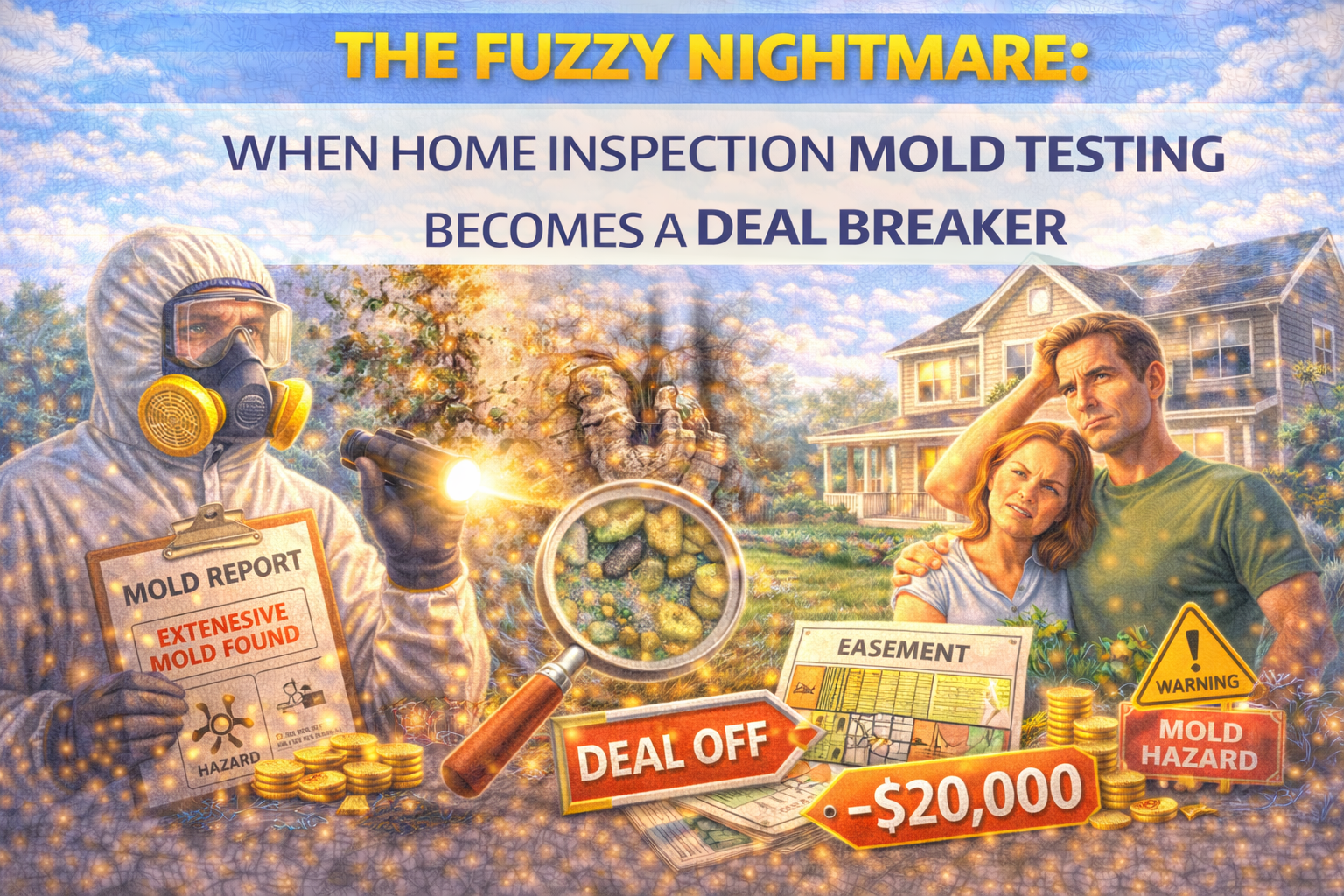
Found your dream home but smell something funky? We break down when home inspection mold testing is necessary and when a positive result means you should walk away.
Table of Contents
I’ll never forget a showing I did a few years back. The house was impeccable—staged to perfection, fresh paint, brand new quartz countertops. My clients were already picking out where to put their sectional. Then, we opened the basement door. A heavy, earthy smell hit us like a wall. It wasn’t just “old house smell”; it was the scent of moisture that had been sitting for a long time.
My clients looked at me with wide eyes. “Is that mold?”
That single question can kill a real estate deal faster than a bad appraisal. While a squeaky floorboard or a dated furnace is annoying, mold feels personal. It feels toxic. And honestly, it often is. This is why home inspection mold testing is one of the most controversial and critical parts of the due diligence process.
If you are currently under contract or about to make an offer, you need to know the difference between a minor mildew issue and a structural disaster. Let’s dive into the gritty details of home inspection mold testing and identify the real deal breakers.
Why Your Standard Inspector Might Miss It
Here is a common misconception: buyers assume their general home inspector will find all the mold. They might not.
A general inspector is looking for visible issues. If there is a massive patch of black fuzz on the drywall, they will flag it. But mold loves to hide. It grows behind wallpaper, under carpets, and inside HVAC ducts. Unless you specifically request home inspection mold testing, the inspector isn’t going to start taking air samples or cutting holes in the wall.
If you suspect water damage or smell that tell-tale mustiness, you need to bring in a specialist. Paying for professional home inspection mold testing gives you data, not just guesses. It tells you what kind of spores are in the air and, more importantly, how many.
The Two Types of Tests You Need to Know
When you order home inspection mold testing, you usually get one of two things (or both):
- Air Quality Sampling: The inspector sets up a device that sucks in air and traps spores on a slide. They compare the indoor air to the outdoor air. If the indoor count is 100 times higher than the outdoor count, you have a problem.
- Surface Swab/Tape Lift: If there is visible growth, the inspector lifts a sample to identify the specific strain.
I always recommend air sampling as part of your home inspection mold testing. Why? Because I’ve seen houses that looked spotless but had sky-high spore counts because of a hidden leak behind the shower.
When is Mold a Deal Breaker?
Not all mold is created equal. Finding a bit of mildew on the caulk in a 20-year-old bathroom is normal. That is a maintenance issue, not a crisis. You don’t need extensive home inspection mold testing to tell you to buy some bleach.
The real deal breakers usually show up in three specific areas:
1. The Attic “Bloom”
In colder climates, poor ventilation often leads to condensation in the attic. I’ve walked into attics where the entire underside of the roof sheathing looked like a leopard—covered in black spots. If your home inspection mold testing reveals widespread growth in the attic, you are looking at a massive bill. It often requires replacing the roof decking and fixing the ventilation, not just scrubbing the wood.
2. The HVAC Contamination
This is my personal nightmare. If there is mold growing inside the furnace or ductwork, every time the heat turns on, it is blowing spores into every room of the house. Home inspection mold testing is crucial here because you can’t always see inside the ducts. If the HVAC system is compromised, remediation often involves replacing the entire system and sanitizing the whole house. For many buyers, that is a hard “no.”
3. Toxic Black Mold (Stachybotrys)
The media loves to talk about “toxic black mold.” While not every black spot is toxic, home inspection mold testing can confirm if Stachybotrys chartarum is present. This strain produces mycotoxins that can cause serious health issues. If a report comes back positive for this, especially if you have kids or anyone with asthma, it is often a valid reason to walk away.
The Cost of Ignorance vs. The Cost of Remediation
Many buyers skip home inspection mold testing to save $400. That is a dangerous gamble.
Remediation is expensive. We aren’t talking about a handyman with a spray bottle. Professional mold remediation requires negative air pressure machines, Tyvek suits, and tearing out drywall. A small bathroom job might cost $2,000. A whole-house issue can easily run $20,000 to $40,000.
If you skip home inspection mold testing and find the problem six months after moving in, that bill is 100% yours. Your homeowner’s insurance likely won’t cover it if they determine it was a pre-existing condition (which they usually do).
Negotiating After a Positive Test
So, the home inspection mold testing came back positive. Now what? Do you panic?
Not necessarily. In real estate, everything is negotiable.
If the mold is localized—say, under a kitchen sink where a pipe leaked—you can ask the seller to fix it. However, do not let the seller do it themselves. Demand that they hire a certified remediation company and provide a “clearance certificate” proving the mold is gone.
Using the results from your home inspection mold testing, you can also ask for a price reduction (credit) at closing. Personally, I prefer the credit. I’d rather hire my own contractors to ensure the job is done right than trust a seller who is just trying to get out of the house as cheaply as possible.
The “Seller Disclosure” Loophole
Sellers are legally required to disclose known issues. But “known” is a tricky word. A seller can honestly say, “I didn’t know there was mold behind the drywall.”
This is why your inspection contingency is your safety net. It gives you the right to perform home inspection mold testing and back out if you don’t like the results. Without that contingency, you might be forced to buy a moldy house or lose your earnest money deposit.
New Construction Isn’t Immune
Do not assume that just because a house is brand new, it is clean. I have ordered home inspection mold testing on new builds and found serious issues.
How? Building materials (lumber) often sit out in the rain during construction. If the builder seals up the walls before the wood is fully dry, mold grows inside the wall cavity. It’s rare, but it happens. If you smell something off in a model home, trust your nose and demand testing.
Understanding the “False Alarm”
Sometimes, home inspection mold testing can scare you unnecessarily. You might see a report that says “Elevated Penicillium/Aspergillus.” Sounds scary, right?
But then you look closer and realize the inspector left the back door open during the test, and it was a windy day. Or maybe the basement is just dusty. Interpreting the data requires context. This is why you need a buyer’s agent who can read the report calmly and ask the inspector clarifying questions. Don’t let a minor blip in the home inspection mold testing data scare you out of a great house.
FAQ Section
1. How much does home inspection mold testing cost? On average, expect to pay between $300 and $500 on top of your standard home inspection fee. This usually includes air samples and a lab report. If you need extensive invasive testing (cutting into walls), it will cost more.
2. Can I use a DIY mold test kit from the hardware store? Please don’t. These kits are notoriously unreliable. They almost always grow something because mold spores are naturally in the air everywhere. They don’t give you a quantitative analysis or tell you if the levels are dangerous. Professional home inspection mold testing is the only way to get actionable data for a real estate transaction.
3. Does the seller have to pay for the mold remediation? No, they don’t have to. However, once you share the home inspection mold testing report with them, the issue becomes a “known material fact.” If the deal falls through, they are legally required to disclose that mold to the next buyer. This puts pressure on them to fix it or negotiate with you.
4. Is mold covered by home warranties? Usually, no. Standard home warranties cover mechanical failures (like a broken dishwasher), not environmental hazards. Some premium plans might offer limited coverage, but don’t count on it. Rely on your home inspection mold testing to catch issues before you close.
5. How long do the results take? Lab results typically take 24 to 48 hours. If you have a short inspection window (e.g., 5 or 7 days), you need to schedule the home inspection mold testing immediately so you have time to negotiate before your contingency expires.
Conclusion
Mold is scary, but it isn’t a ghost. It’s a biological organism that needs water to survive. If you cut off the water and remove the affected material, the problem goes away.
The goal of home inspection mold testing isn’t to find a sterile house—that doesn’t exist. The goal is to ensure you aren’t buying a money pit disguised as a cozy bungalow. If the test comes back clean, you sleep better at night. If it comes back dirty, you have the leverage to negotiate or the wisdom to walk away.
Don’t let the fear of what’s behind the walls paralyze you. Get the test, get the facts, and make a decision based on data, not dread.